Monash Global Peace and Security (Monash GPS) — Monash University — 2026
Funded by Global Affairs Canada — Elsie Initiative for Women in Peace Operations
This research project, funded by Global Affairs Canada as part of the Elsie Initiative for Women in Peace Operations (2023–2026), is the first of its kind to identify the causes and consequences of marginalising women with caring responsibilities from security sector institutions in troop and police contributing countries (T/PCCs) and UN peace operations. Drawing from engagement with 553 research participants—including 257 interviewees and 296 survey respondents—representing 63 countries, the project reveals that caring responsibilities are one of the most persistent, structural barriers to women's meaningful participation in UN peace operations. They shape who can deploy, who can progress, and who remains in uniform.
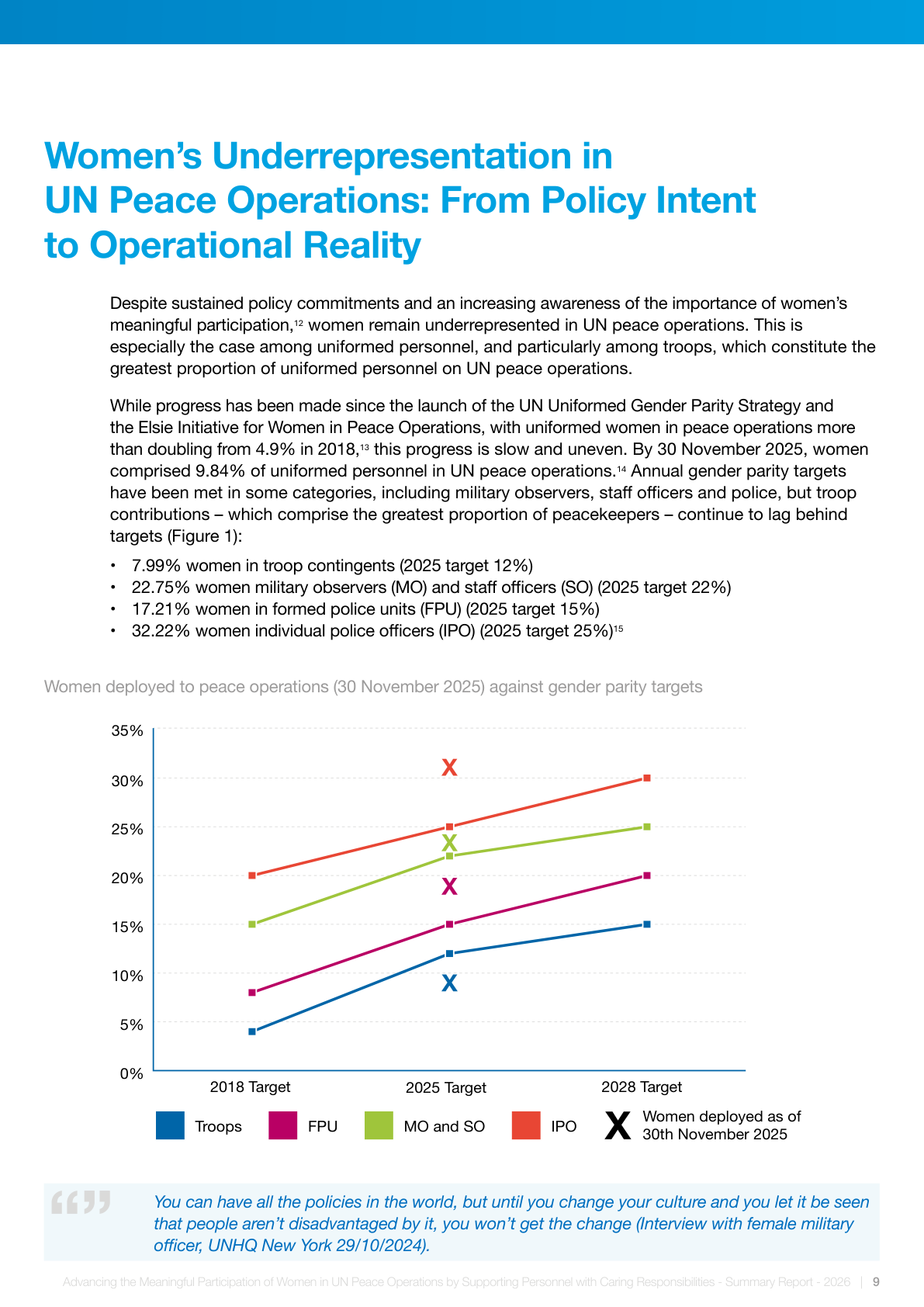
Despite sustained policy commitments under the Women, Peace and Security agenda and the UN Uniformed Gender Parity Strategy, women comprise approximately 10% of uniformed personnel in UN peace operations. Caring responsibilities—principally caring for children—adversely impact the recruitment, retention, training, career progression and deployment of women. The challenges are practical, cultural, organisational, personal and gender normative, and they fall disproportionately on women due to the highly gendered nature of unpaid care work globally.
The research also reveals that personnel with caring responsibilities bring distinctive and valuable skills to peace operations—including empathy, attentive listening, negotiation and a deeper understanding of the communities affected by conflict. When organisations support these personnel, they enhance capability, retain talent and improve outcomes. Conversely, when support is lacking, it sustains the underrepresentation of women, compromises efforts to advance gender equality, narrows the diversity of peacekeepers, and harms the well-being of all personnel.
The project provides comprehensive, evidence-informed recommendations for the United Nations, troop and police contributing countries, armed forces and police, and individual personnel. These recommendations address policy reform, workplace culture change, flexible working arrangements, investment in care infrastructure, training, and the elimination of gender and maternal bias in deployment and career progression decisions.
Accompanying the research report is a comprehensive Organisational Toolkit designed to help defence and police institutions and UN peacekeeping entities translate evidence into action. Grounded in lived experience, policy analysis and operational practice, the Toolkit provides 15 practical tools—including a Care Audit, an Organisational Scorecard, implementation planning templates, bias interruption tools for selection processes, deployment checklists, a Family Care Plan template, self-care guidance and a communications strategy—to support organisations in identifying barriers, prioritising reforms and tracking progress over time.
The Toolkit aligns with national defence policies, UN Peacekeeping standards, the UN's Uniformed Gender Parity Strategy (2018–2028), the Elsie Initiative for Women in Peace Operations and Women, Peace and Security commitments. It is designed for senior military and police leadership, commanders and supervisors, human resource personnel, mission planners, and individual uniformed personnel—including those considering deployment.
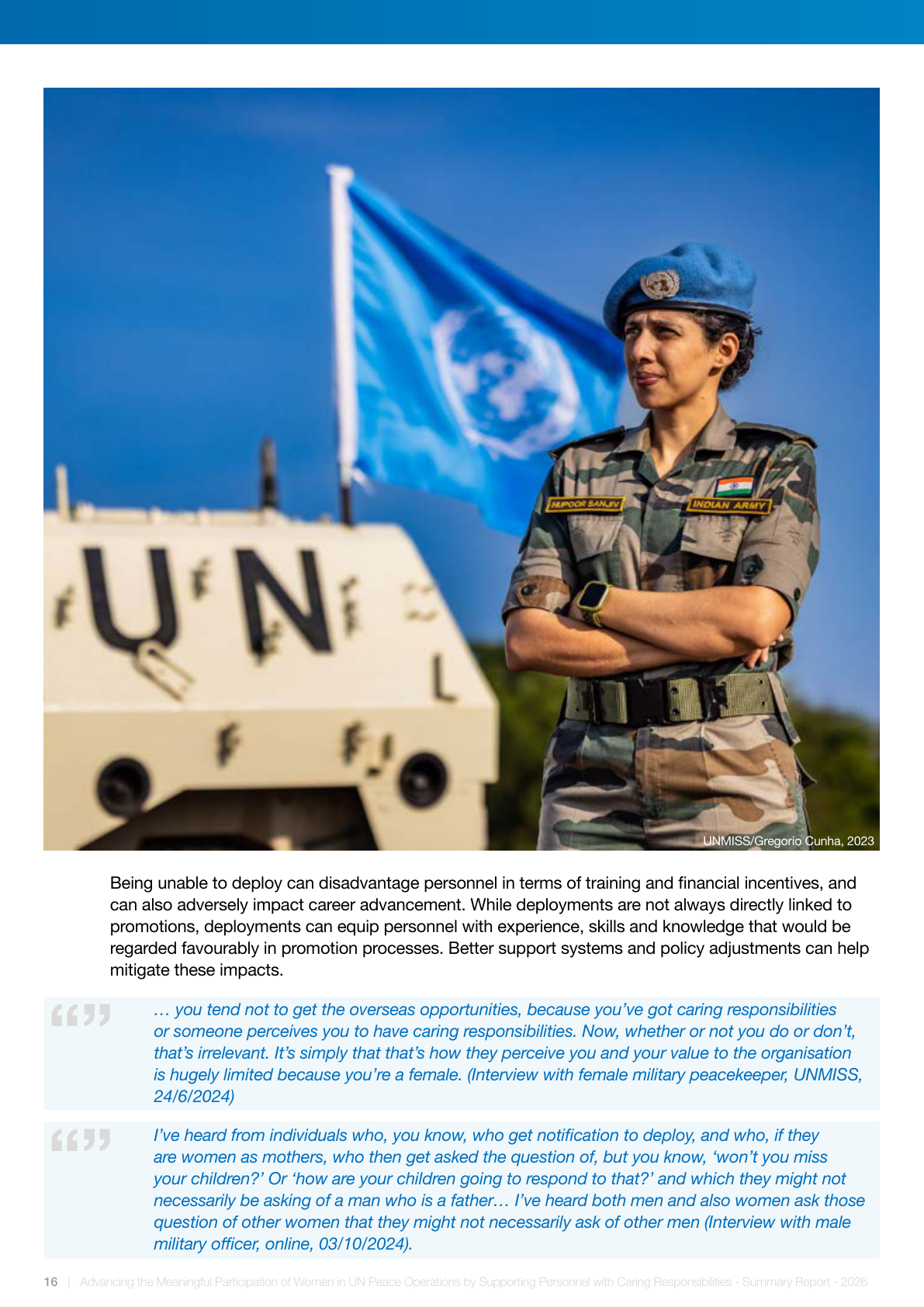
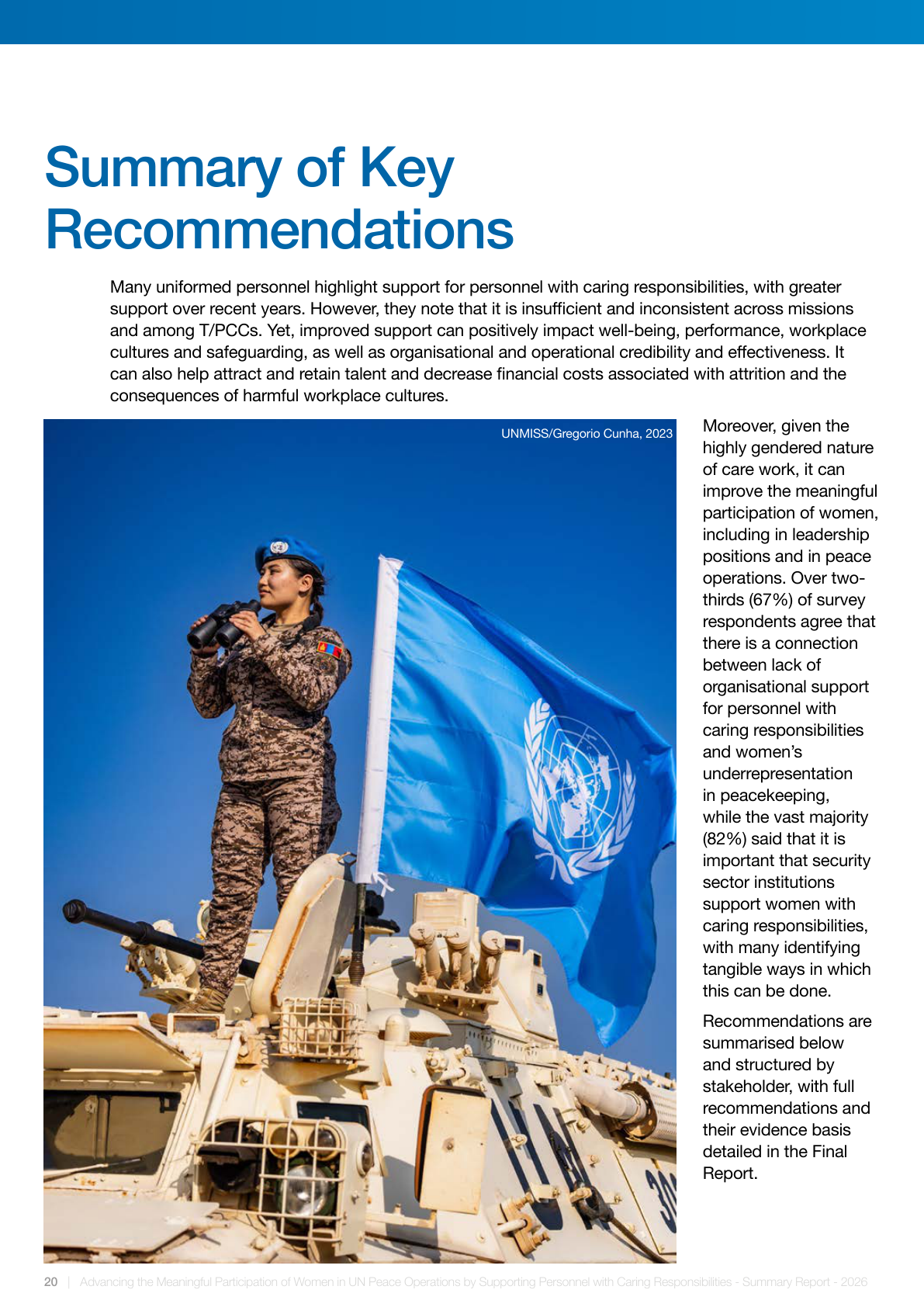
Drawing from research findings, a free course is available online in English, French, Spanish and audiobook, hosted by the Peace Operations Training Institute and developed with funding by Global Affairs Canada. The Family Responsibilities and Care course examines how caring responsibilities affect the recruitment, retention, well-being, and career progression of peace operations personnel, offering practical guidance for personnel in balancing care responsibilities with work. It equips students with practical strategies for self-care, peer support, and organizational change, and provides guidance on what individuals, leaders, and organizations can do to build more inclusive, care-attentive workplace cultures.
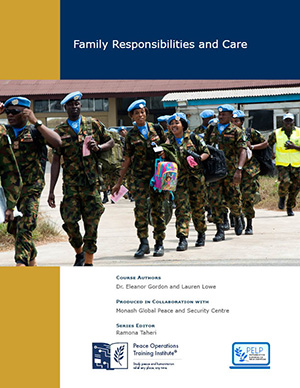
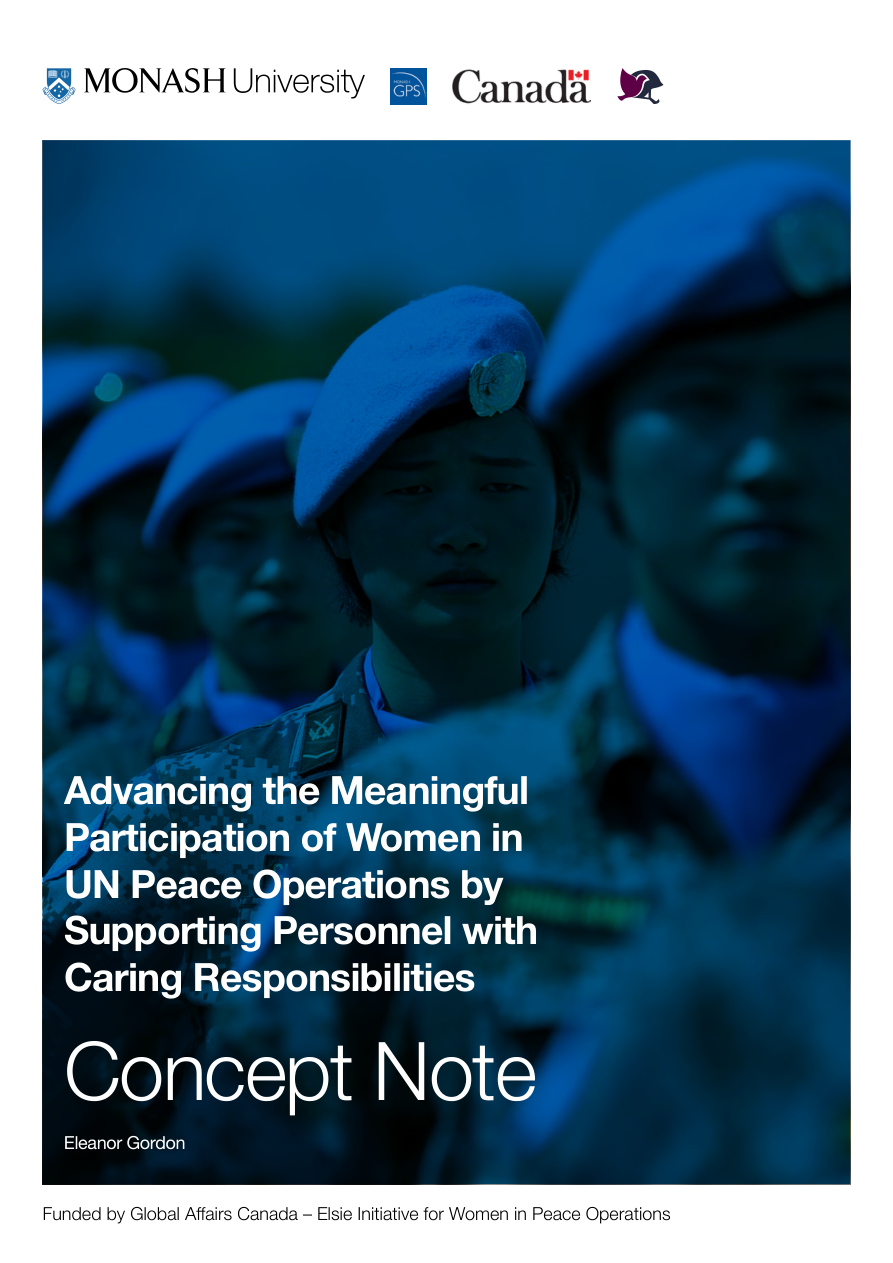
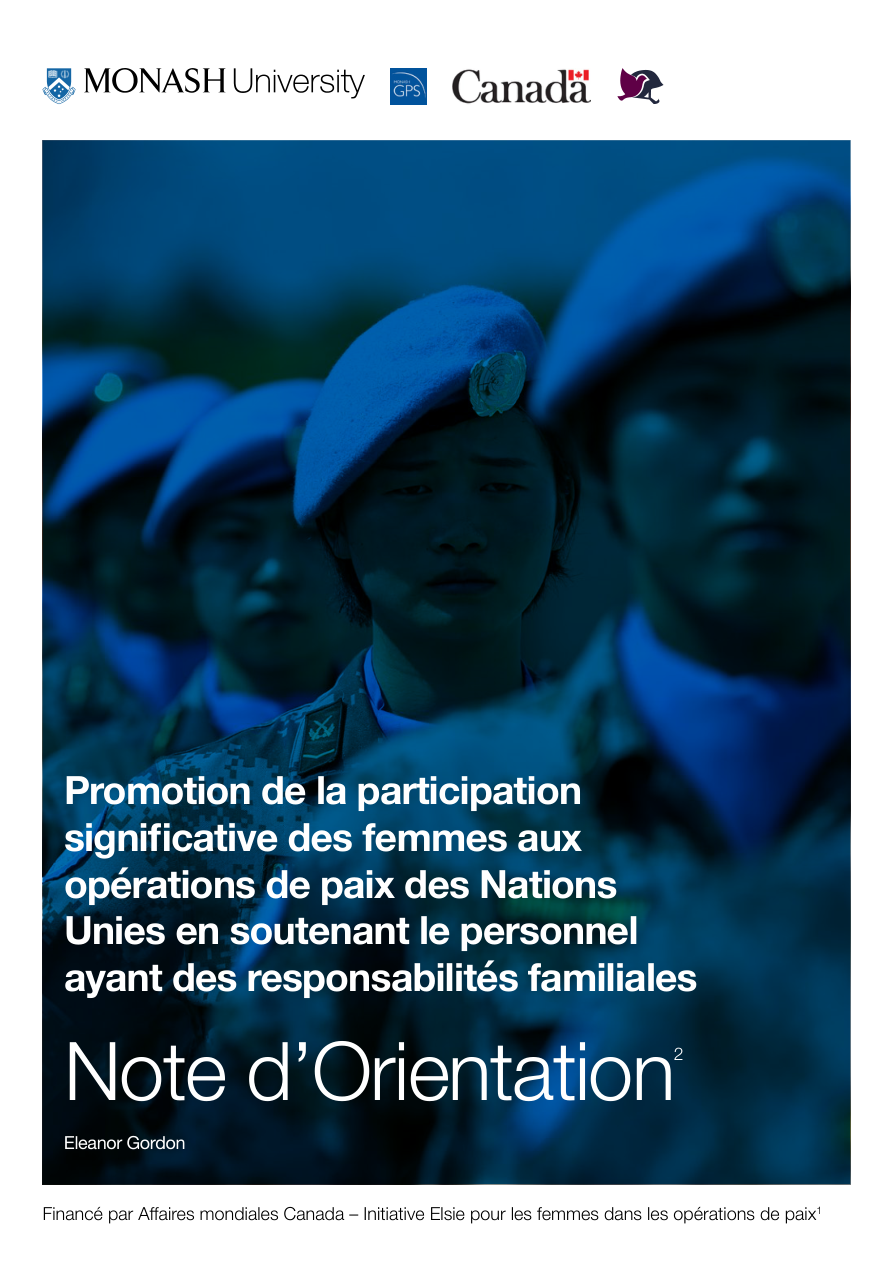
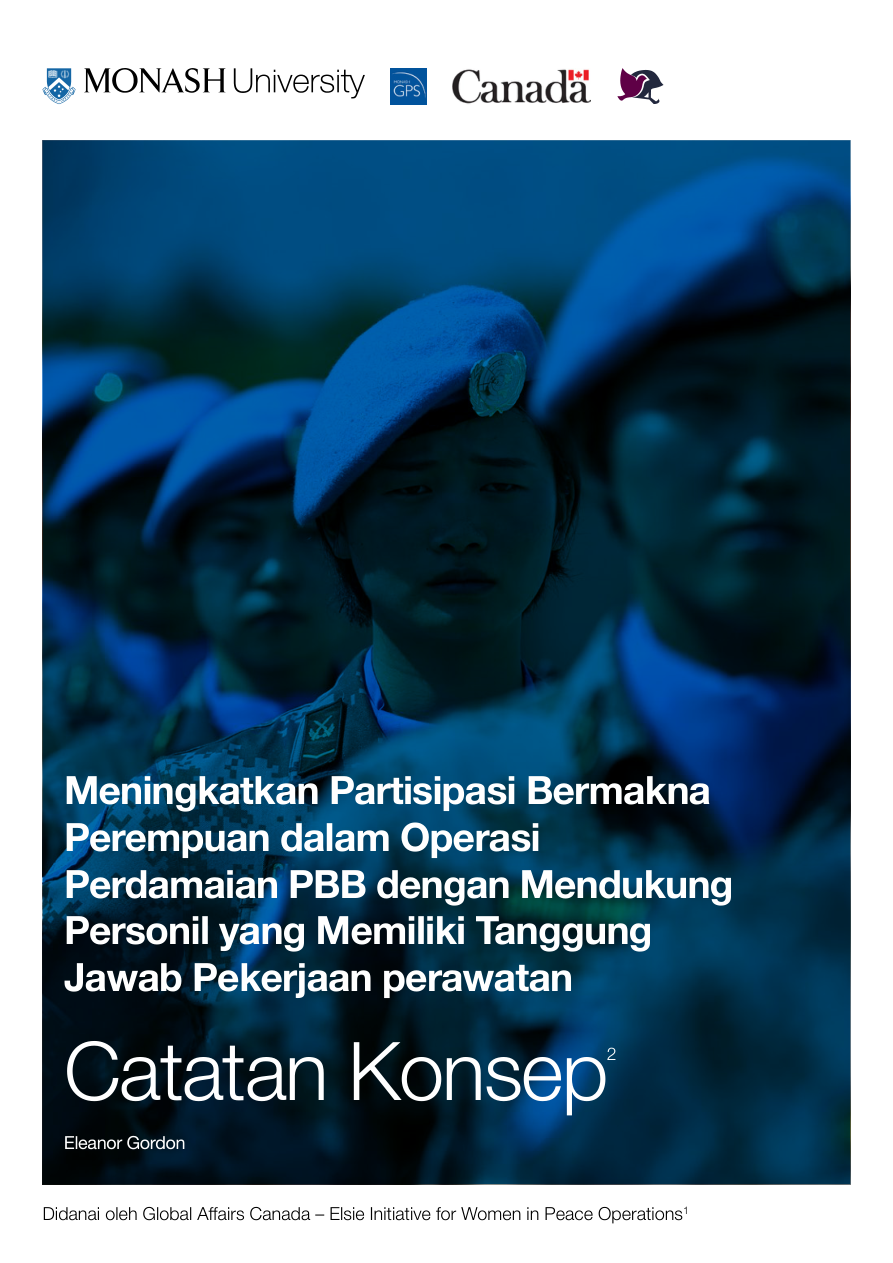
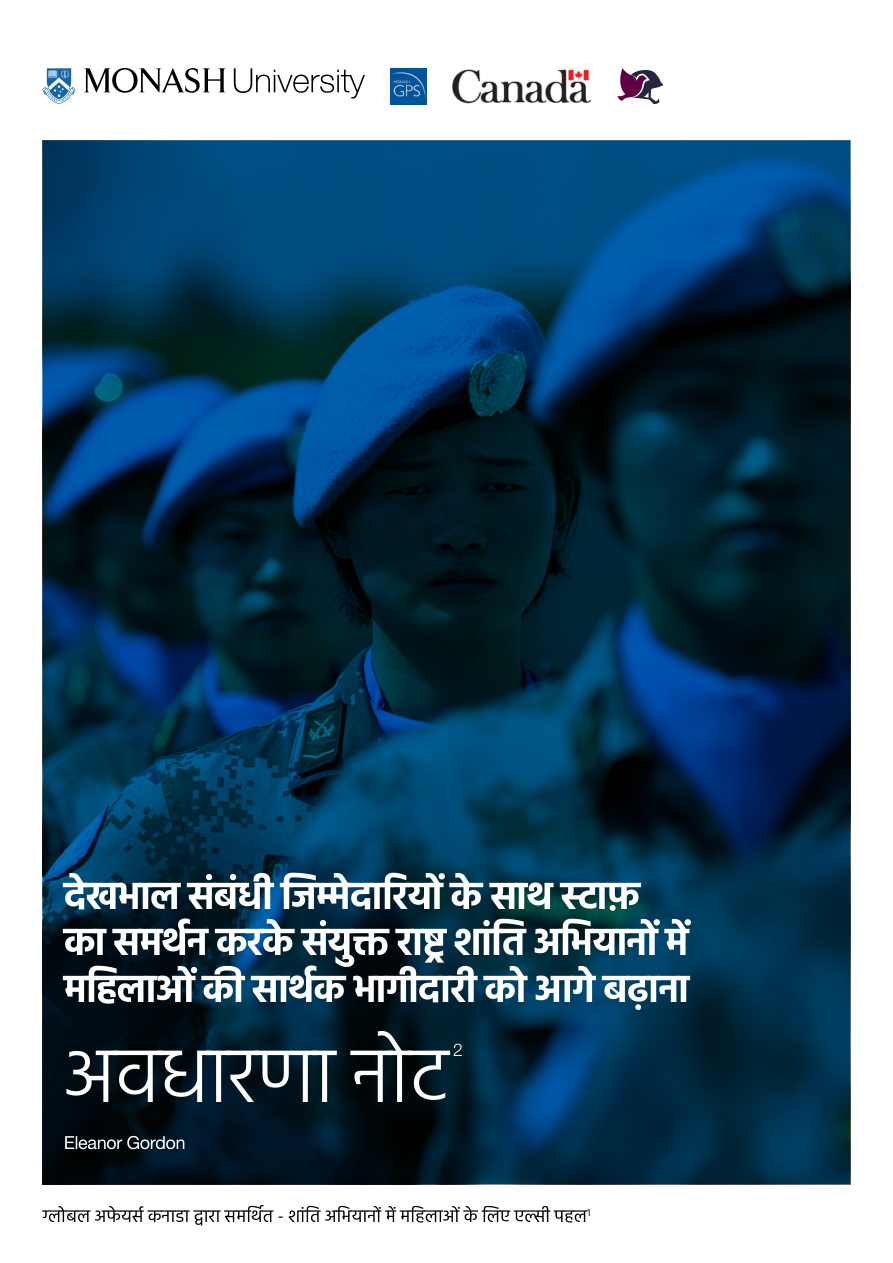
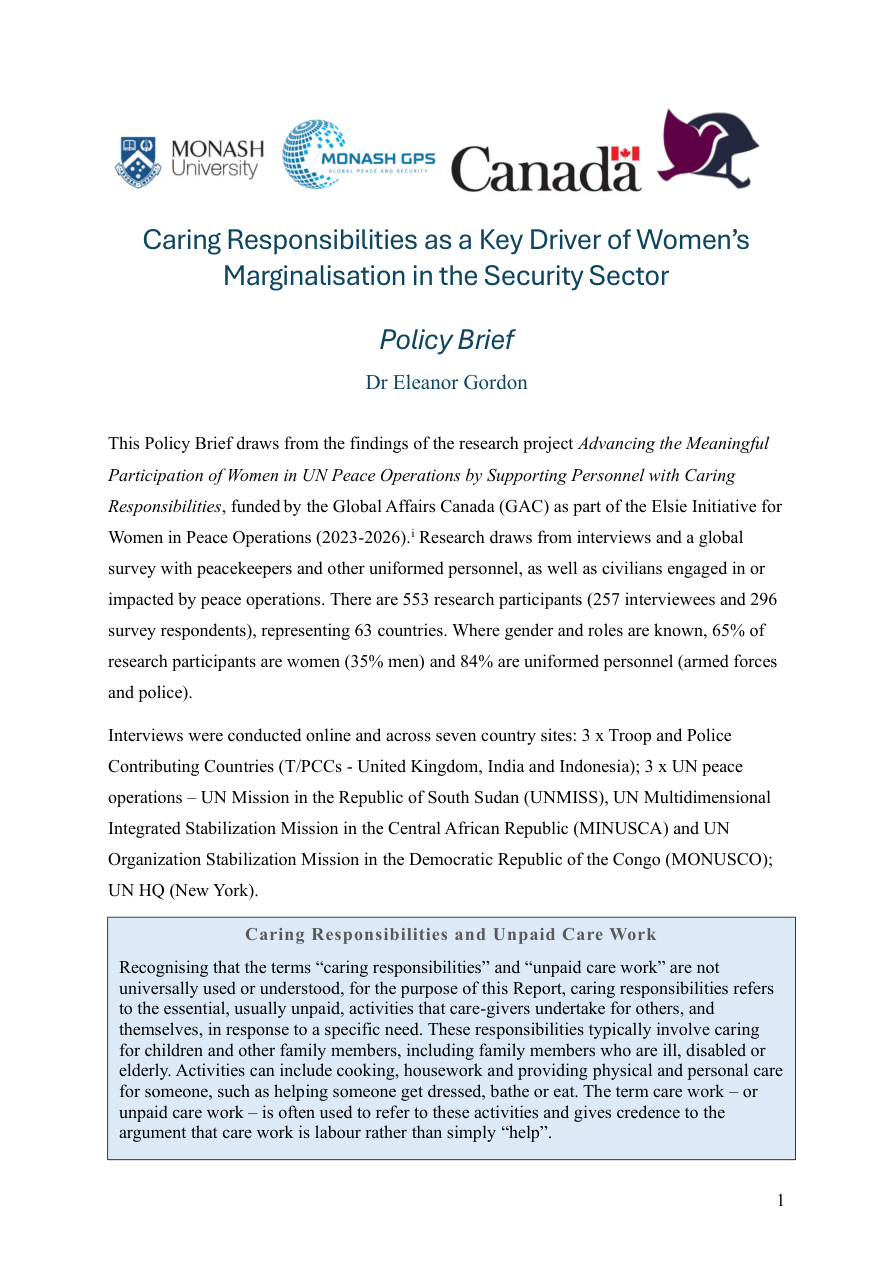
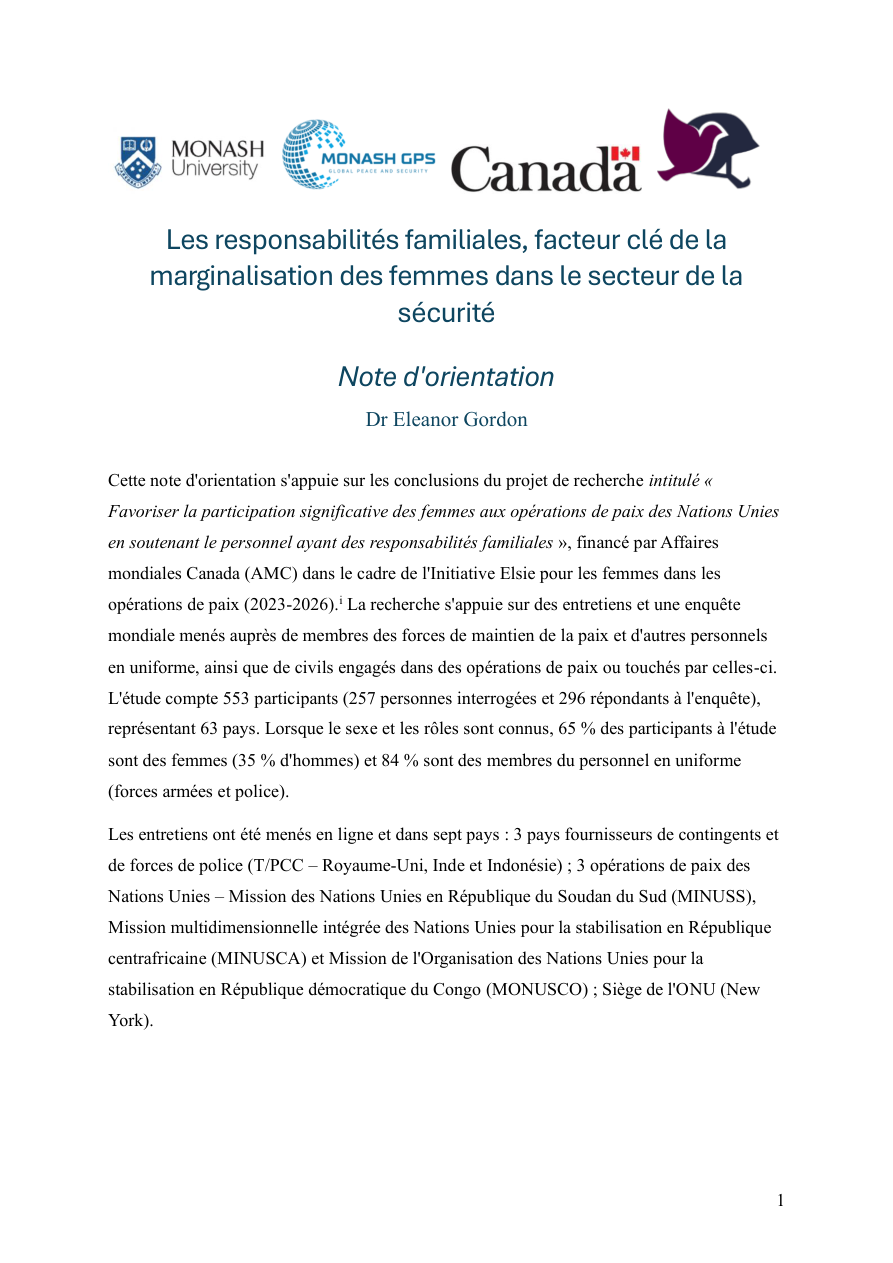
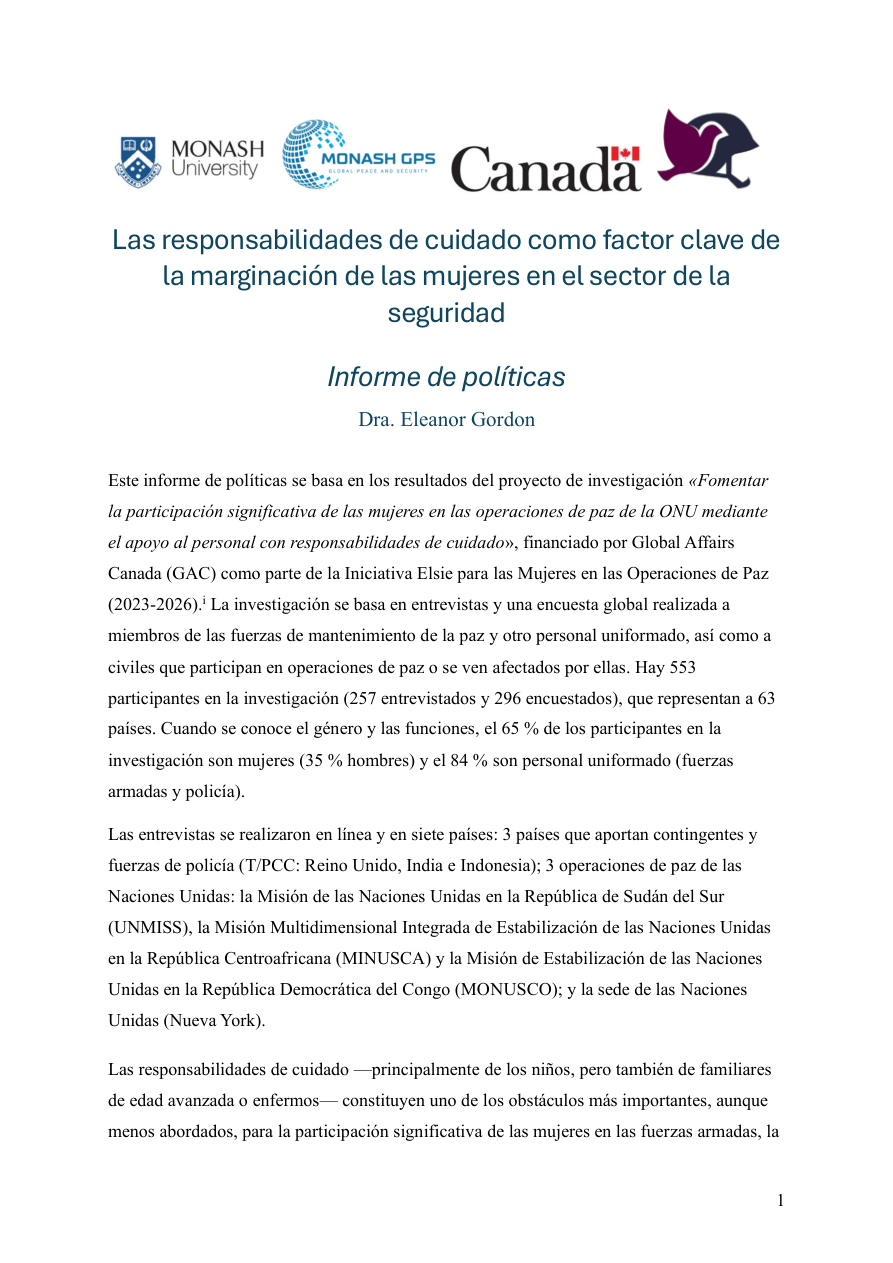
All reports and the Organisational Toolkit are available in English, French, Spanish, Bahasa Indonesia and Hindi. Click any cover to download the PDF.